Queue Management System in Saudi Arabia: 2026 Buyer’s Guide
Long waiting lines cost Saudi businesses customers, staff morale and reputation. A modern queue management system in saudi arabia replaces crowded counters with digital tickets, clear screens and live data. This guide explains how these systems work, what to compare before you buy, and how to roll one out without disrupting daily service.
The advice below comes from the kind of projects commonly seen in clinics, banks, telecom stores and government service centres across the Kingdom. It is written for operations managers who need a practical plan, not a sales pitch.
Why Saudi Service Centres Are Investing in Digital Queues
Saudi Arabia’s Vision 2030 programme pushes every sector toward better customer experience and digital service delivery. You can read the national targets on the official Vision 2030 portal. Retail, healthcare and telecom branches now compete on how quickly they serve visitors, not only on price.
Three local factors make queue technology especially valuable:
- Peak-hour pressure. Branches fill sharply after Asr and Isha prayers, and again during Ramadan evenings.
- Mixed language needs. Visitors speak Arabic, English, Urdu, Hindi and Tagalog, so screens and tickets must support more than one language.
- Heat and comfort. Customers do not want to stand outside in summer. Remote ticketing lets them wait in a car or a cafe.
What Is a Queue Management System and How Does It Work?
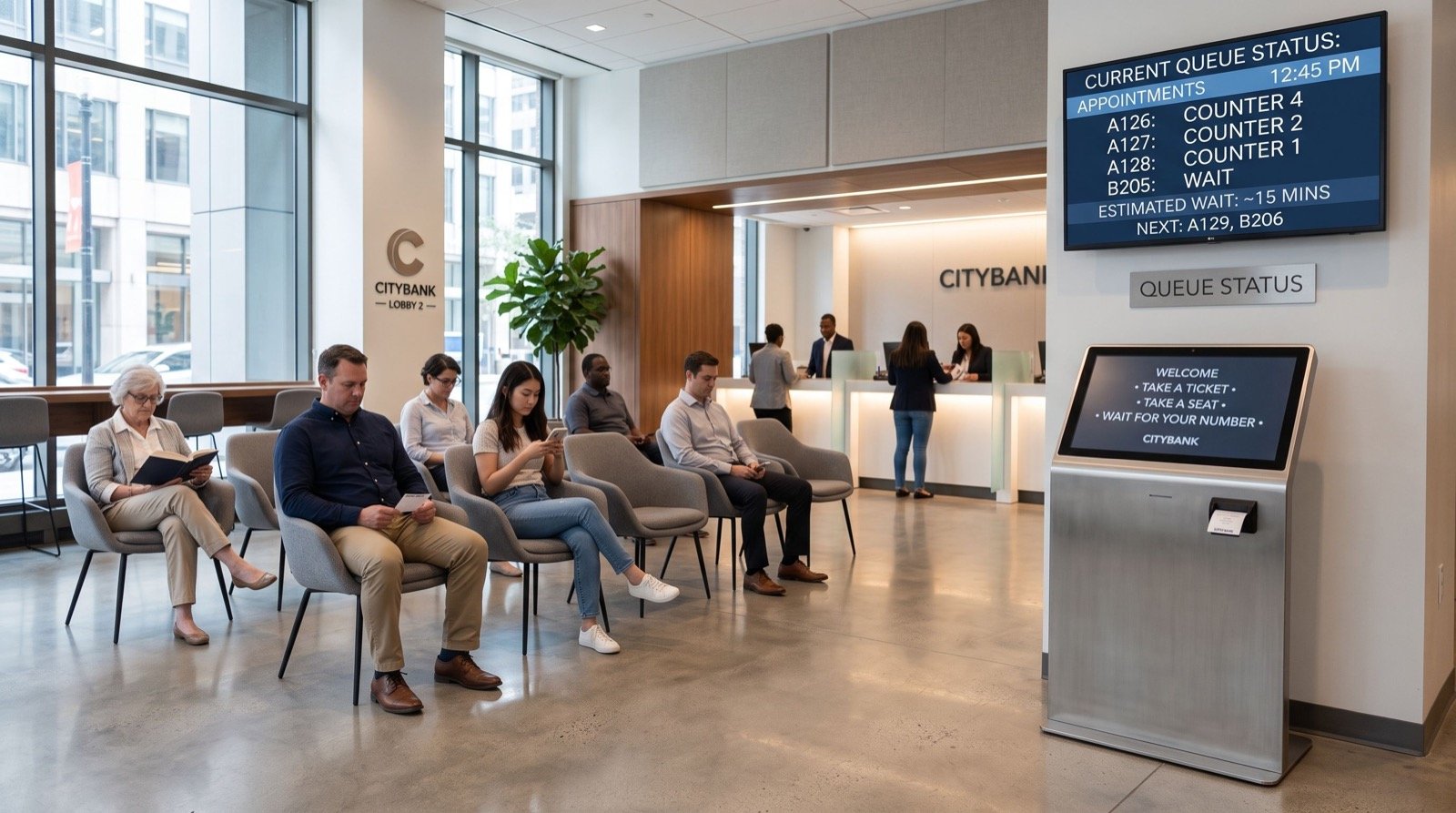
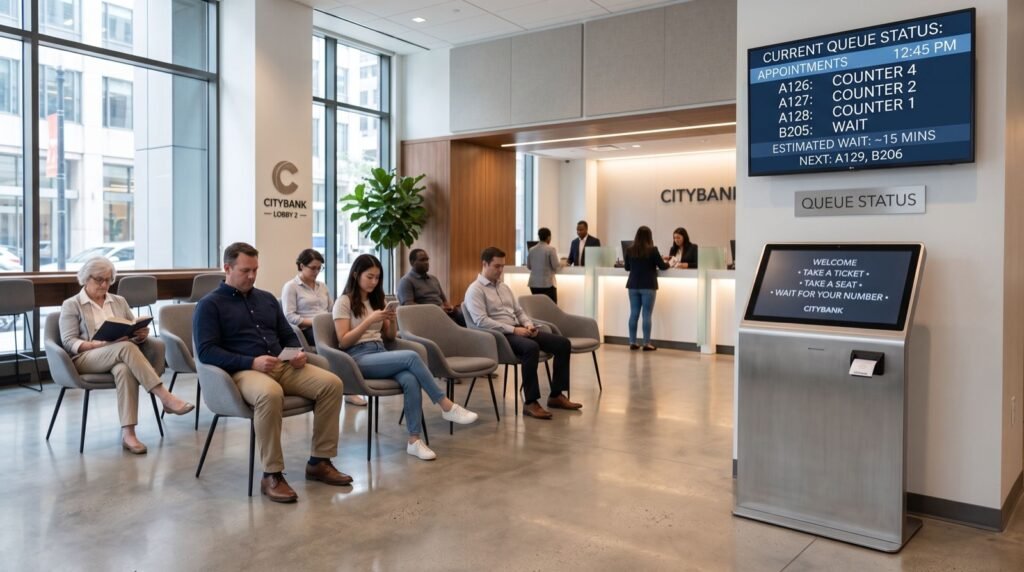
A queue management system (QMS) is a combination of hardware and software that issues numbered tickets, routes visitors to the correct counter, and reports on waiting times. Think of it as an air-traffic controller for your service floor.
The core components
- Ticket dispenser or kiosk. Visitors choose a service and receive a printed or mobile ticket.
- Display screens. Large panels show the current number and counter, often with an audio announcement.
- Counter terminals. Staff press a key or tap a screen to call the next person.
- Central software. It sets rules, priorities and reports on every transaction.
- Mobile and SMS tools. Customers join the line remotely and receive a notification when their turn nears.
The flow in practice
A visitor walks in, selects “new SIM” or “billing” on the kiosk, and takes a ticket. The software estimates the wait based on live counter speed. When the ticket is called, a chime and an Arabic voice prompt direct the visitor to counter four. After service, the agent closes the transaction and the timestamp feeds the report.
Key Features to Compare Before You Buy
Not every platform suits every branch. Use the table below as a starting checklist when you request quotations.
| Feature | Why it matters | Typical Saudi requirement |
|---|---|---|
| Arabic and English interface | Customers read tickets and screens in their own language | Full right-to-left support |
| Mobile ticketing | Reduces crowding in the waiting area | QR code or WhatsApp link |
| Priority rules | Serves elderly, VIP and disabled visitors first | Configurable by service type |
| Analytics dashboard | Shows wait times and agent performance | Daily and monthly exports |
| Multi-branch control | Lets head office compare locations | Cloud or hybrid hosting |
| Local support | Fast fixes when hardware fails | On-site engineers in major cities |
Pay attention to support terms. A beautiful kiosk is useless if a faulty printer waits two weeks for a spare part.
How Much Does a Queue System Cost in the Kingdom?
Pricing depends on the number of counters, the type of kiosk and whether you choose cloud or on-premise software. A small clinic with three counters and one display needs far less than a bank with twenty. Request itemised quotes so you can see hardware, licences, installation and annual support separately.
Budget for these line items:
- Ticket kiosk or wall-mounted dispenser
- Counter terminals or tablets
- Display screens and audio
- Software licence (one-time or subscription)
- Installation, staff training and annual maintenance
Our experience suggests that the payback often arrives within a year when a branch cuts walk-away customers and shortens average handling time. Track those two numbers before and after installation so you can prove the return.
Which Industries Benefit Most?
Healthcare
Clinics use colour-coded tickets for triage, lab and pharmacy. Patients can wait in a seated area or step outside until they receive an alert.
Banking and government
Branches handle high volumes with strict service categories. Priority rules and audit logs are essential here, and so is accurate reporting for compliance.
Telecom and retail
Stores balance quick transactions such as bill payment with longer tasks such as device financing. Separate queues keep the quick jobs from being stuck behind the long ones.
Restaurants and drive-thrus
Order-point and pickup timing matter more than tickets. Food outlets often pair queue analytics with kitchen display tools to hold service time under a target.
Is the Same Approach Used Elsewhere in the Region?
Yes, and regional examples help you plan. In Pakistan, retailers and hospitals in major cities use similar setups. If you manage branches in both countries, review how a queue management system in lahore is configured, because the workflow concepts translate well even when languages and peak hours differ.
Sharing one reporting standard across countries lets head office compare average wait times fairly. That comparison often reveals which branch has staffing gaps and which one has a layout problem.
Step-by-Step Rollout Plan
- Map your services. List every transaction type and estimate its normal duration.
- Measure the baseline. Record current waiting time, abandonment and busiest hours for two weeks.
- Design the floor. Place kiosks where visitors naturally enter. Position screens where they are visible from every seat.
- Configure rules. Create service categories, priorities and language options.
- Train the staff. Run a half-day practice session so agents call tickets confidently.
- Pilot one branch. Collect feedback and adjust before a wider launch.
- Review monthly. Use the analytics to rebalance counters and update staffing rotas.
A practical tip: add a small floor sign that says “Take a ticket here” in both Arabic and English. Many first-time failures happen simply because visitors do not notice the kiosk.
Compliance, Data and Digital Readiness
Queue software stores phone numbers and visit histories, so treat it like any other customer-data system. Choose a provider that supports role-based access and clear retention settings. Branches that also issue invoices should align their wider digital processes with national rules, including e-invoicing. For a quick look at that wider readiness picture, this guide from reputable service experts covers the 2026 checklist for small and mid-sized firms.
You can also confirm official requirements directly on the ZATCA website before you finalise any integration with billing tools.
Common Mistakes to Avoid
- Buying hardware first and thinking about workflow later.
- Creating too many service categories, which confuses visitors.
- Ignoring audio, so people miss their call number.
- Skipping staff training and expecting the software to fix poor habits.
- Never reading the reports. Data only helps if someone acts on it.
Frequently Asked Questions
How long does installation take?
A single-branch setup is usually ready within a few days once hardware arrives. Larger multi-branch projects need staged deployment over several weeks.
Can customers take a ticket from their phone?
Yes. Most platforms provide a QR code or link so visitors join the line remotely and get an alert when their turn is close.
Does the system work in Arabic?
A good platform supports full right-to-left Arabic on tickets, screens and voice calls, alongside English and other languages.
What happens if the internet goes down?
On-premise or hybrid systems keep issuing tickets locally. Cloud-only setups should include an offline mode, so confirm this before you sign.
Final Thoughts
Choosing a queue management system in Saudi Arabia in 2026 is less about gadgets and more about service design. Start with your visitors’ real journey, pick a platform that supports Arabic and mobile ticketing, and measure results every month. Ready to shorten your lines? Request a demo, compare itemised quotes, and pilot the system in your busiest branch first.